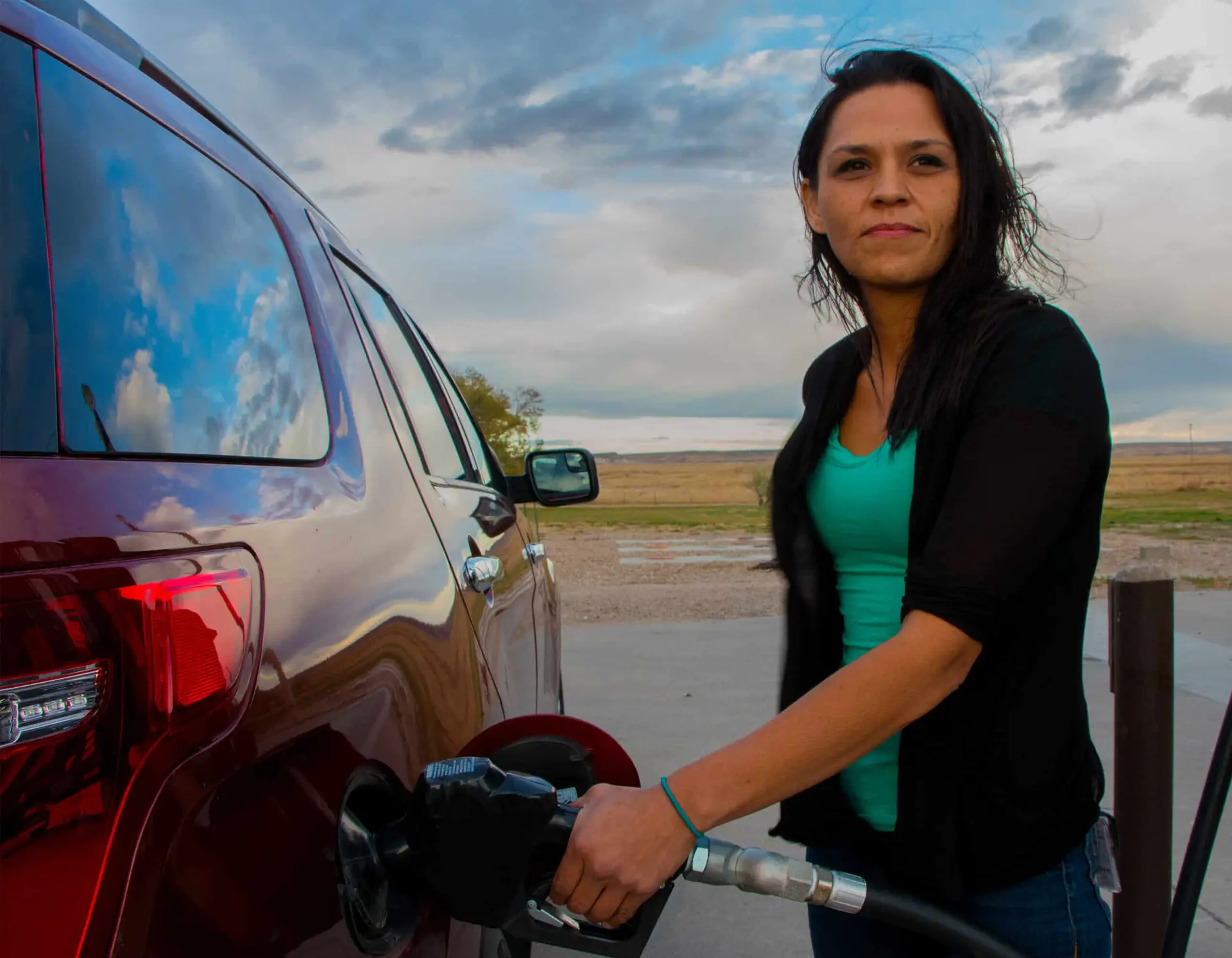


Over a century after the 1924 Indian Citizenship Act officially recognized Native American people born in the United States as citizens, voting rights advocates and Native communities are now grappling with a significant blow to their right to vote ahead of the 2026 midterm elections.
On April 29, the U.S. Supreme Court sided with self-described “non-African American” voters who argued that a congressional district map drafted by Louisiana lawmakers after the 2020 census violated the Voting Rights Act. In their lawsuit, Louisiana v. Callais, the voters objected to the creation of a second Black-majority district, out of six congressional districts in the state, where Black Louisianans make up one-third of the population. They claimed the action discriminated based on race, and six of the court’s nine justices agreed.
The ink was barely dry on the Callais opinion when states, including Wyoming, Montana, Florida, Alabama, Tennessee, Mississippi, Georgia and South Carolina, began altering, or figuring out how to alter, their election districts to eliminate those dominated by voters of color and to favor Republicans in races for local, state and national offices.
This redistricting will exacerbate the existing barriers to Native election access says Judith LeBlanc, a citizen of the Caddo Nation and executive director of Native Organizers Alliance, which helps grassroots Indigenous groups build their organizations. “We have been facing challenges and obstacles to vote ever since we got the right to vote,” LeBlanc says. The Callais-driven redistricting “has one purpose—to deny us the right to elect someone who has the same life experiences we do,” she says. She calls it “gerrymandering driven by a political agenda.”
In her dissent, Justice Elena Kagan wrote that Section 2 of the Voting Rights Act of 1965, which guarantees that nothing shall “deny or abridge the right of any citizen of the United States to vote on account of race or color,” is now “all but a dead letter.” She was joined in her dissent by Justices Sonia Sotomayor and Ketanji Brown Jackson.
In an opinion concurring with that of the majority of justices, Justice Clarence Thomas (joined by Justice Neil Gorsuch) wrote that the Supreme Court should never have interpreted Section 2 in a way that gave racial groups “an entitlement to roughly proportional representation.” He called this a “disastrous misadventure.”
“This point of view is either profoundly mistaken or intentionally cruel,” says Jacqueline De León, of Isleta Pueblo, senior staff attorney for the Native American Rights Fund (NARF).” It denies the reality that minorities in this country are often targeted and stripped of political power.”
Indeed, the opinion has given free rein to that phenomenon. De León points out that much of the redistricting that has followed the decision has been focused on discriminating based on race. “Which is exactly what Section 2 was designed to prevent,” she says. Having unleashed racial discrimination, the Callais decision would then do for Native voters exactly what it set out to accomplish, which is block claims intended to protect their rights.
An example of a Section 2 claim is the federal lawsuit three Crow Creek Sioux Tribe members brought in 2003 against Buffalo County, South Dakota. The tribal members alleged voting districts were drawn to discriminate against the county’s majority Native population, violating the Voting Rights Act’s Section 2, as well as the U.S. Constitution’s 14th and 15th amendments, which guarantee the right to vote, the right to equal protection and more.
In elections for County Commission, which is the local governing body, Buffalo County had for decades packed 1,500-plus tribal members into one district, while 100-plus and 300-plus mostly non-Native residents made up each of the other two districts. This allowed the relatively small number of non-Natives to control Buffalo County’s government and resources. After the lawsuit was settled in 2004, the districts were evened up, and county elections were put under federal supervision.
Long-haul voting
The Supreme Court’s gutting of Section 2 of the Voting Rights Act is part of a larger, decades-long struggle on the part of Native Americans to gain equal access to the ballot box. “Indians have faced a prolonged battle to gain the franchise on a footing equal to that of Whites,” write University of Utah Political Science Professor Emeritus Daniel McCool and co-authors in Native Vote: American Indians, the Voting Rights Act, and the Right to Vote (Cambridge University Press, 2007). “Much like the struggle for Black voting rights in the South, this conflict has been long, arduous and often bitter.”
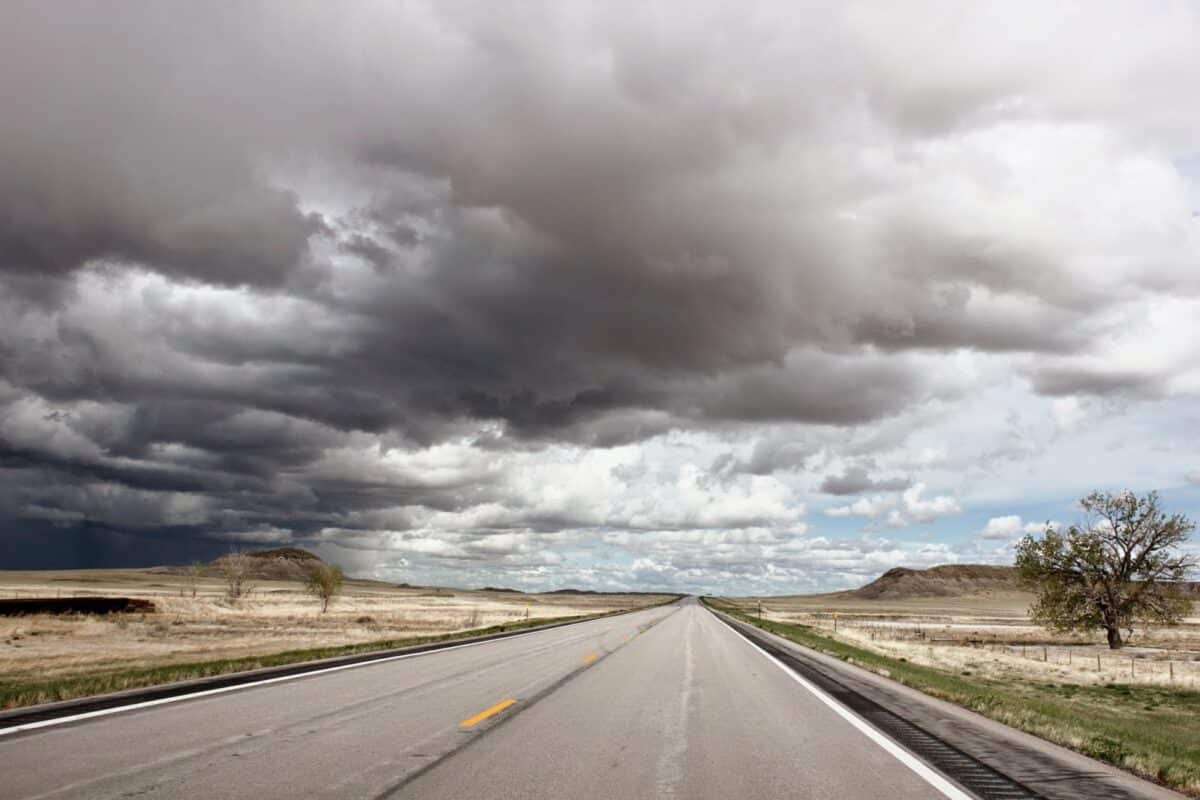
In the rural West, nearly universal impediments for Native voters are the long distances they must travel to register and to vote. Some voters from Montana reservations, for instance, drive as many as 200 miles round trip. In research undertaken for the Justice Department in 2012 for the federal lawsuit Wandering Medicine v. McCulloch, University of Wyoming geography professor Gerald R. Webster examined three Montana reservations. He found that in these areas, whites, on average, lived much closer to courthouse voting precincts than reservation residents. As a result, in each case the latter traveled two to three times farther than whites to get to the precinct to vote. The problem was compounded by limited access to a vehicle and funds for gas.
In early May, a Montana state court recognized this problem when it blocked a 2025 state law that would have cut back Election Day voter-registration hours, which had previously allowed voters to both register and vote on the same day. The law would have eliminated the final eight hours of Election Day voter registration.
In a case brought by NARF, the American Civil Liberties Union and others, the court ruled that the measure likely disproportionately harmed Indigenous voters from rural reservation communities and violated their right to vote. Requiring many of them to make two trips—once to register, then again on Election Day to cast their ballots—was a too heavy a burden, said the court. Because the case was filed in state court, the losers cannot appeal it to the Supreme Court, and it will not be affected by the Callais decision.
As Gene Small, president of the Northern Cheyenne Tribe, in Lame Deer, Montana, which was a plaintiff in the lawsuit, remarked in June 2025: “We are not asking for special treatment—we’re demanding equal treatment.”
For De León, the outcome of the case was both successful and irritating. “It’s incredibly frustrating to see wasted time and resources—used to deny the vote rather than address inequalities in voter access,” she says.
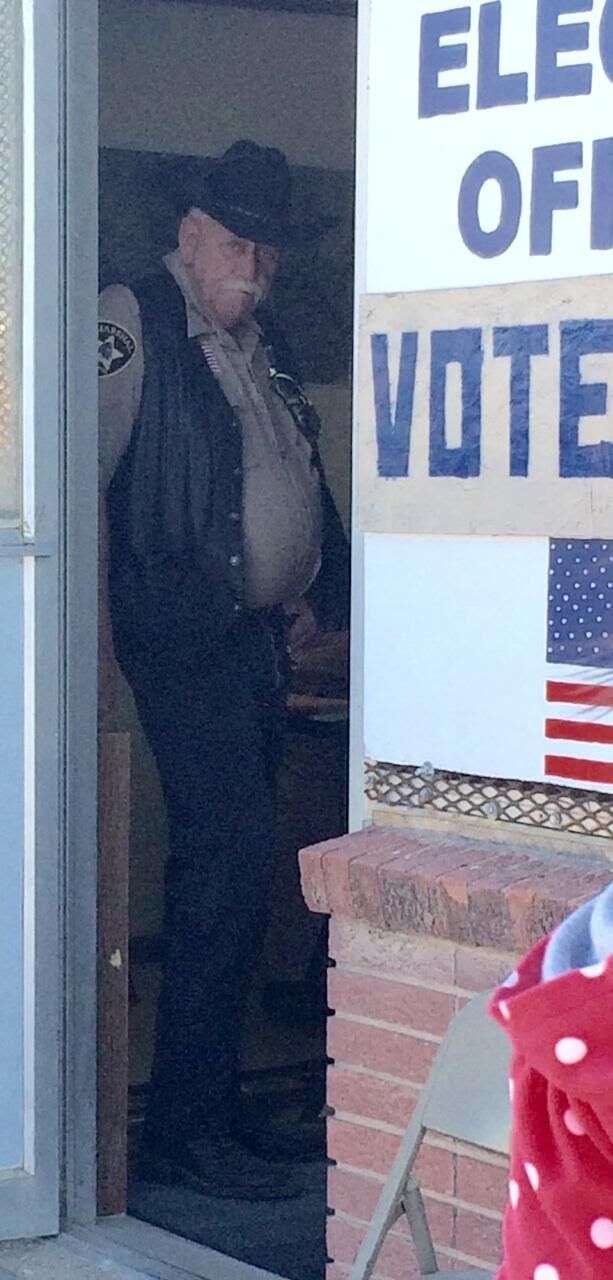
Hurdles for Native voters may be official, like federal and state laws and Supreme Court opinions. Other barriers are spontaneous schemes, cooked up locally. In 2014, after days of high turnout of Native voters during early voting, the mainly white-inhabited South Dakota county running federal elections for Pine Ridge Indian Reservation stationed a sheriff in the doorway of the polling place.
Pot-bellied and mustachioed, with the requisite cowboy hat and boots, he blocked the opening and alarmed the reservation’s Oglala Sioux voters. They worried that getting past him to cast a ballot might inexplicably land them in jail. The Justice Department intervened, telling the county voting officials to remove the sheriff. They did, and turnout rebounded.
A seat at the table
Reduced access to the polls has had enduring consequences for Fort Belknap Indian Community in northeastern Montana, says William Main, the community’s former chairman. When governments—county, state or federal—make decisions that affect those with minimal voting rights, the consequences for any tribe, Fort Belknap among them, are lack of economic development, meager educational offerings, inadequate medical and dental care and more, he says.
Treaty rights that Native people paid for years ago with their lives and their land are being stripped away, according to LeBlanc at the Native Organizers Alliance. This includes the right to health care, she says. “We’ve never had fully funded health care, so we’ve depended on third parties—Medicare, Medicaid and the Affordable Care Act. When the Medicaid cuts hit hard later this year, it’s going to have a devastating effect on our health care systems.”
At Fort Belknap, insufficient federal support for law enforcement is a serious problem, Main says. In 2022, the tribe brought a federal lawsuit challenging the funding level. The suit is ongoing. Other tribes in Montana have said that they too lack appropriate federal financing for law enforcement.
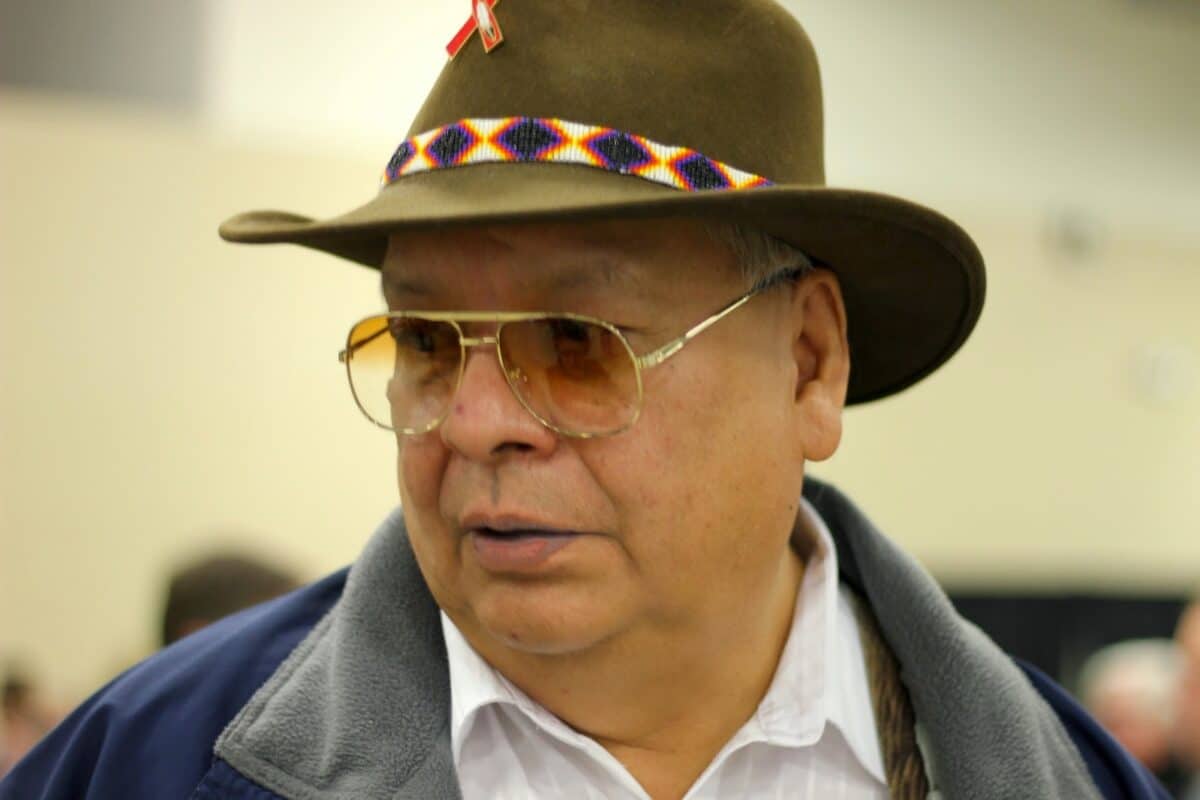
Barn Raiser has reported on even more tribes that struggle to get the federal government’s attention for this critical community-safety issue. In 2023, the Oglala Sioux Tribe sued the Bureau of Indian Affairs for paying for just 30-some officers and seven criminal investigators to patrol the 30,000 tribal members on its 3.1-million-acre Pine Ridge Indian Reservation—an area nearly the size of Connecticut. In 2024, the business committee of the Ute Tribe told Barn Raiser that three officers at most patrol an even larger expanse—its 4.5-million-acre Uintah and Ouray Reservation, in Utah.
Ravaging the land
Disenfranchised Native communities can experience extreme environmental destruction, and they can face severe backlash for making their voices heard.
The 2016 protests at Standing Rock against an oil pipeline planned to cross the Missouri River and jeopardize their water supply drew attention to the many dangerous pipelines and other oil and natural-gas extraction and transport facilities on Native land. Journalists from around the nation and the world reported on the North Dakota police and private contractors they hired, who shot demonstrators with rubber bullets and subjected them to gassing, hosing with cold water in below-freezing temperatures, arrest and other aggressive tactics.
The methods were not new. During the 1960s and 1970s, unarmed members of Northwest tribes were shot at, beaten and arrested while seeking recognition of treaty-guaranteed fishing rights, according to former Puyallup Tribe chairwoman Ramona Bennett. For decades, Nebraska law enforcement roughed up and arrested protesters from Pine Ridge Indian Reservation as they tried to shut down Whiteclay, a tiny bordertown that existed almost exclusively for more than a century to bootleg alcohol onto the dry reservation.
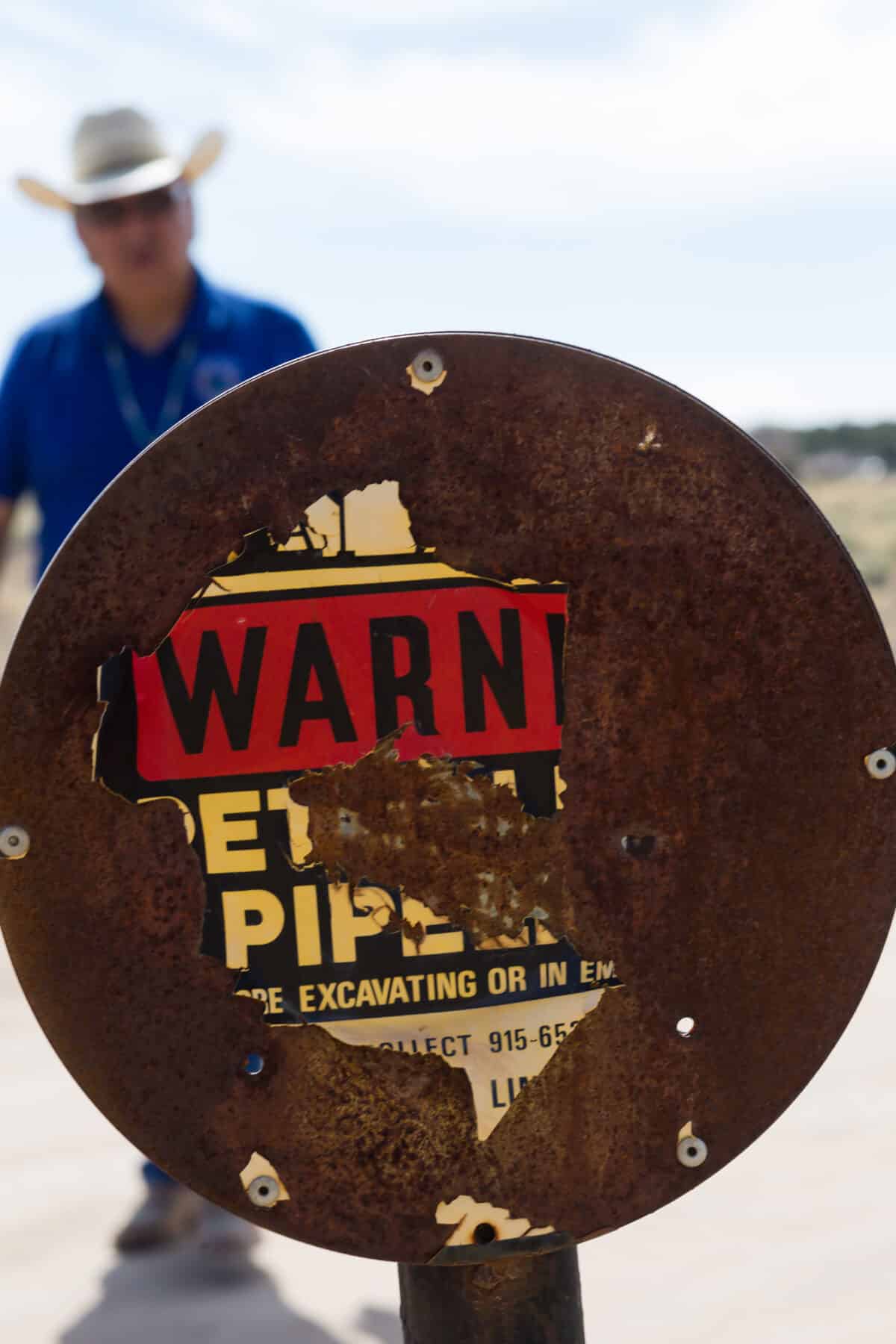
Mining is another scourge. A 2023 paper from the Native American Budget and Policy Institute reports that in the 12 western-most U.S. states, more than 600,000 Native people live within a few miles of 160,000-plus abandoned mines for uranium, vanadium, gold, copper and lead. The mines are typically unmarked and unfenced, says the report. According to a 2017 study in Current Environmental Health Reports, they continually expose tribal members to the dangerous toxins used to extract and refine the ore and will not be cleaned up for generations.
After decades of looking the other way, the Nuclear Regulatory Commission (NRC) traveled to the Navajo Nation in 2022 and took testimony on the country’s largest, almost entirely unknown nuclear accident. The accident at Three-Mile Island, Pennsylvania, recognized worldwide, resulted in a negligible release of radioactivity. Few, other than the Navajos affected, have heard of a far worse incident at Church Rock, New Mexico. In 1979, a dam holding back mining waste broke, releasing more than 95 million gallons of radioactive liquid and 1,000 tons of a sand-like radioactive substance. The dangerous material spewed some 150 miles over the Navajo reservation. Many Navajos were afflicted with cancer and other chronic diseases. On its website, NRC still refers to Three-Mile Island as “the most serious accident in U.S. commercial nuclear power plant operating history.”
Looking forward
In the face of all these difficulties, numerous Native candidates look likely to be elected or re-elected in upcoming national, state and local races. They include former Secretary of the Interior Deb Haaland, of Laguna Pueblo, running for governor of New Mexico; Minnesota Lt. Governor Peggy Flanagan, White Earth Band of Ojibwe, campaigning to become U.S. senator from that state; Congresswoman Sharice Davids, Ho-Chunk, seeking re-election as U.S. representative from Kansas; and former Congresswoman Mary Peltola, Yup’ik, looking to become U.S. senator from Alaska.
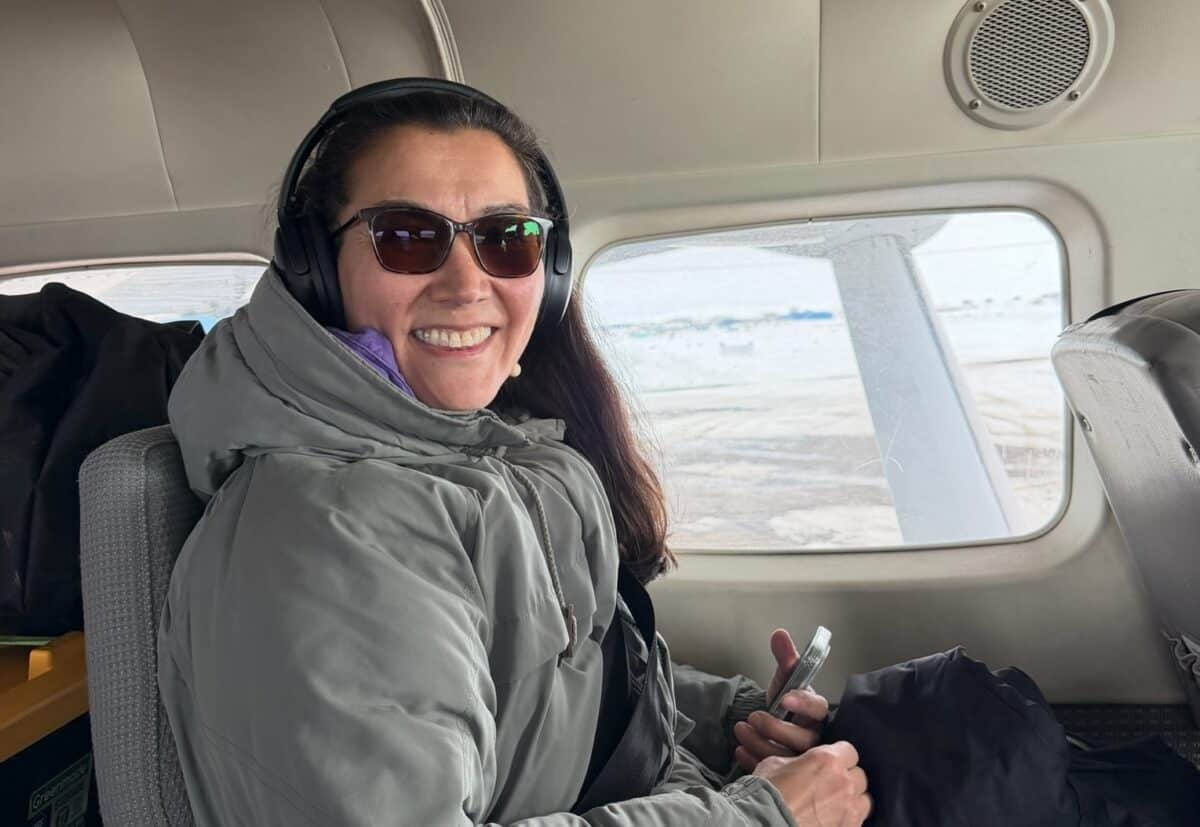
They, and many more Native candidates nationwide, have broad appeal in districts that are not necessarily majority Native. “They’re not like other candidates, who say vote for me, and I’ll accomplish this or that,” LeBlanc says. “Our people’s campaign speeches talk about bringing communities together [and] how important it is to form circles of people who are willing to struggle for everyone’s human rights.”
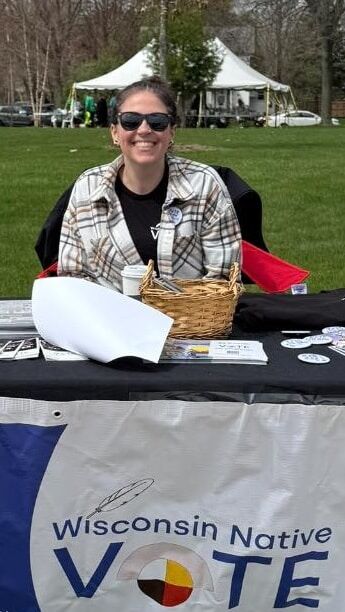
“Indigenous people are taking their place at a table where they’ve always had the right to be,” says Maria L. Haskins, a regional tribal organizer for Wisconsin Native Vote, which is part of the advocacy organization Wisconsin Conservation Voices. Haskins is a Lac Courte Oreilles descendant with Stockbridge-Munsee and Oneida Nation of Wisconsin lineage.
Decades will be required to rebuild the immense destruction of our world and our democracy that has occurred, and is still occurring, according to LeBlanc. But rebuilding will be continual and not simply centered on elections. “We have to think Indian about this problem,” she says. LeBlanc describes 100 years of treaty making, with five generations of Native people leaning into the future. “That’s the position we’re in today, a one-, two- or three-generation effort to create solutions that will be better than what we had.”
Haskins is on the ground in Wisconsin doing just that. “We know our tribal communities are disenfranchised,” she says, “so if we can provide people with accurate information, they will make informed decisions when they’re casting their ballot.” Activities she engages in may include door-to-door canvassing or setting up booths or tables at community events. These range from round dances and powwows to moccasin- and basket-making workshops. She helps tribal members figure out where their precinct is and shows them how to find transportation to it.
“We focus on relationship building,” Haskins says. “Our ancestors have been doing that since the beginning.”
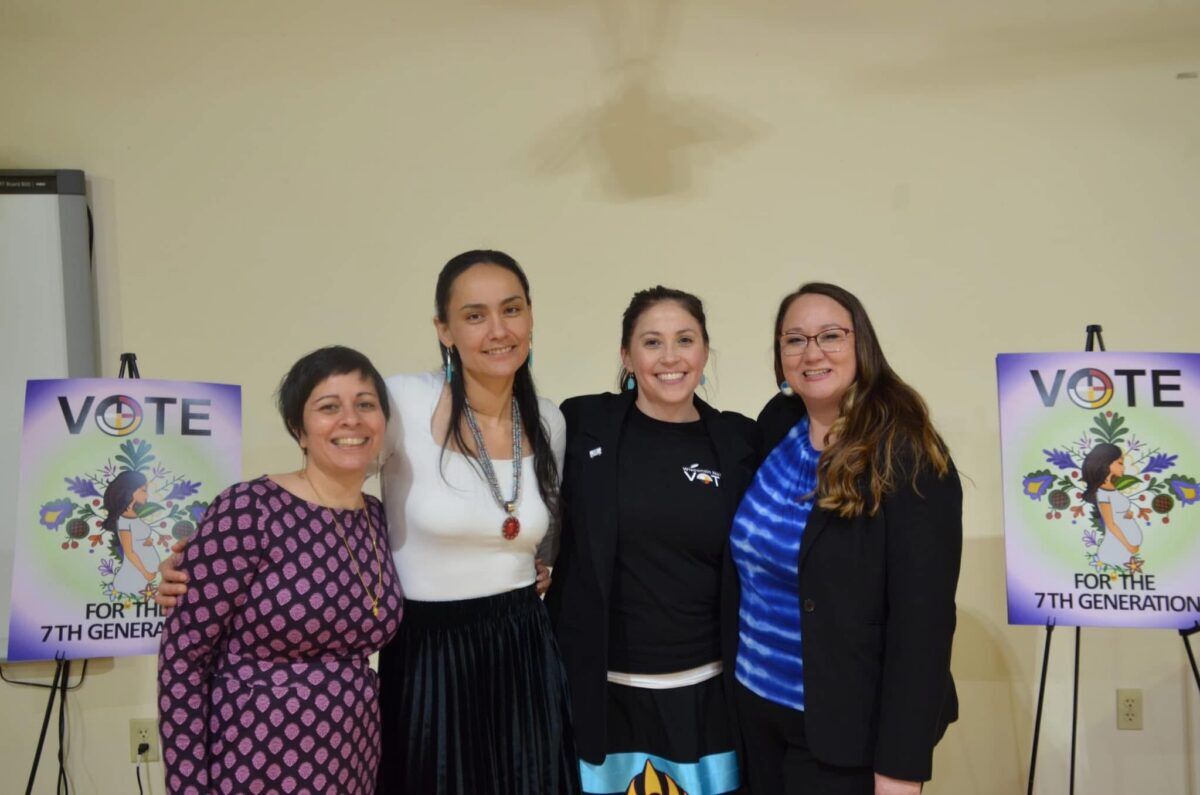
NARF will continue to fight on behalf of Native Americans, De León says. “Callais is a setback, but we will persevere.” She called passage of the John R. Lewis Voting Advancement Act, which includes the Native American Voting Rights Act, essential to the preservation of our democracy.
Says LeBlanc, “We have to create a democracy that we’ve never had before, where sovereignty and the care of Mother Earth and the care of all living beings are at the center of policy making, where we all have equal access and equal rights to live in a good way.”

Stephanie Woodard is an award-winning reporter who covers human rights and the rights of nature. She is the author of American Apartheid: The Native American Struggle for Self-Determination and Inclusion.
Have thoughts or reactions to this or any other piece that you’d like to share? Send us a note with the Letter to the Editor form.