

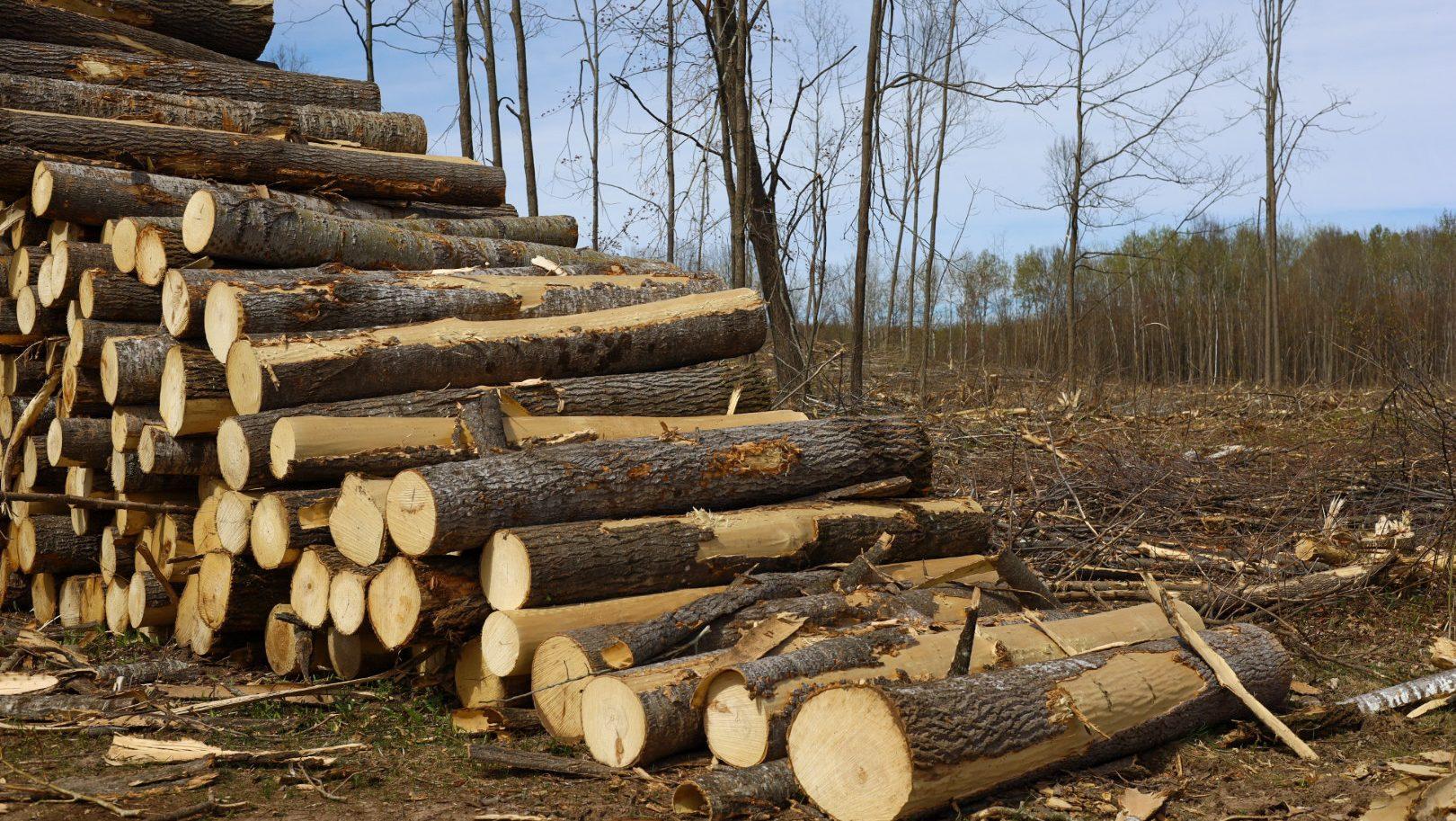
Source: Maddie Schaffer
Mill closures, rising costs strain Wisconsin’s forest industry
Former forester and congressional candidate Fred Clark says new investment and markets are needed to stabilize the state’s timber economy.

May 11, 2026, 5:41 PM CT


Share
Wisconsin’s forest industry is facing growing pressure from mill closures, rising logging costs and changing timber markets.
Former state lawmaker Fred Clark says the future of the Northwoods economy depends on long-term investment in the state’s forests.
Clark, who is currently running for Wisconsin’s 7th Congressional District, recently published a letter calling for renewed investment in Wisconsin forests and the industries tied to them.
Clark has a long background in forestry and conservation, including work as a forest ecologist, forester and land conservation consultant. He has also served on the Wisconsin Natural Resources Board and the Wisconsin Council on Forestry.
“We can’t be assured that the next hundred years are going to be easy if we don’t act smartly about it,” Clark said in a recent interview with WHSM and WBZH.
Industry at a turning Point
According to the Wisconsin Department of Natural Resources, Wisconsin’s forest products industry supports roughly 125,000 jobs and contributes more than $41 billion to the state’s economy.
Clark says Wisconsin’s forests have undergone a major recovery since the “great cutover” era of the late 1800s and early 1900s, when much of the state’s old-growth forest was heavily logged.
“We spent the next hundred years rebuilding,” Clark said. “And we have a strong forest industry, and we have incredibly rich forests that support wildlife and fish and recreation.”
But the industry is under increasing strain.
“The job’s getting harder and harder to work in the woods,” he said. “The prices that mills are able to pay right now are often lower than the costs that loggers have to actually produce that wood.”
Since 2020, Wisconsin has lost at least five major pulp mills, according to a 2024 forestry report from Wisconsin’s Green Fire.
More recently, Ahlstrom announced plans to close its Mosinee pulp mill later this year.
Impacts across rural Wisconsin
Clark says the impacts extend beyond the mills themselves, affecting loggers, trucking companies, landowners and rural communities across Northern Wisconsin.
“For a landowner, if you’re selling timber and planning to receive income from it, you need a logger to buy that wood,” Clark said. “Well, a lot of wood is not even being sold right now.”
He says many communities have already experienced the effects of mill closures firsthand.
“Those facilities sit there empty, the jobs that they supported are gone, the demand for wood that those businesses created is beginning to go away,” Clark said.
Searching for new markets
Clark says Wisconsin must continue investing in new uses for forest products to help stabilize the industry and create long-term demand for timber.
One project Clark points to is the recently signed Forestry Revitalization Act, which supports a proposed Hayward facility that would turn wood waste into sustainable aviation fuel.
He says projects like the Forestry Revitalization Act could help create new markets for lower-value wood while supporting jobs in rural Wisconsin.
“We need to be open to new economic development tools and new markets that can keep our forests productive and our industry strong,” he said.
At the same time, he says any new development must balance economic opportunity with long-term forest sustainability.
“We have guidelines for sustainability in Wisconsin that set limits on the amount of biomass that would be removed from the woods,” Clark said. “Those are really important details to get right.”
Clark also pointed to research at the U.S. Forest Products Laboratory in Madison. Researchers there are developing new uses for wood products, including mass timber construction materials and nanofiber technologies.
“What we need to do is make sure we’re figuring out which of those applications have real potential to become commercial and invest in the kind of businesses that will help scale those products,” Clark said.
Long-term challenges
Clark says Wisconsin forests also face challenges from climate change, invasive species and proposed federal cuts to the U.S. Forest Service.
The U.S. Forest Service manages the Chequamegon-Nicolet National Forest, which covers more than 1.5 million acres in northern Wisconsin.
He says warmer winters are shortening frozen-ground seasons and making logging more difficult.
“The last 50 years, the length of that frozen ground window has gotten shorter and shorter,” he said.
He also pointed to the spread of invasive species like the emerald ash borer, which has devastated ash tree populations across Wisconsin.
In his published letter, Clark also warned proposed federal budget cuts to the U.S. Forest Service and USDA Rural Development programs could weaken Wisconsin’s forest industry and rural communities.
In a separate analysis with former Chequamegon-Nicolet National Forest Supervisor Paul Strong, Clark wrote that the proposed federal budget would cut Forest Service funding by about 65%, from roughly $6.2 billion to $2.1 billion.
“We’ve had great success with Wisconsin forestry because the state of Wisconsin and the federal government made investments,” he said. “But that’s not going to continue if we don’t continue to make those smart investments.”

Maddie Schaffer is a reporter at WBZH and WHSM, covering the Hayward area and surrounding areas in the Northwoods. Email her at [email protected].
Want More Local News?

Civic Media
Civic Media Inc.
The Civic Media App
Put us in your pocket.