

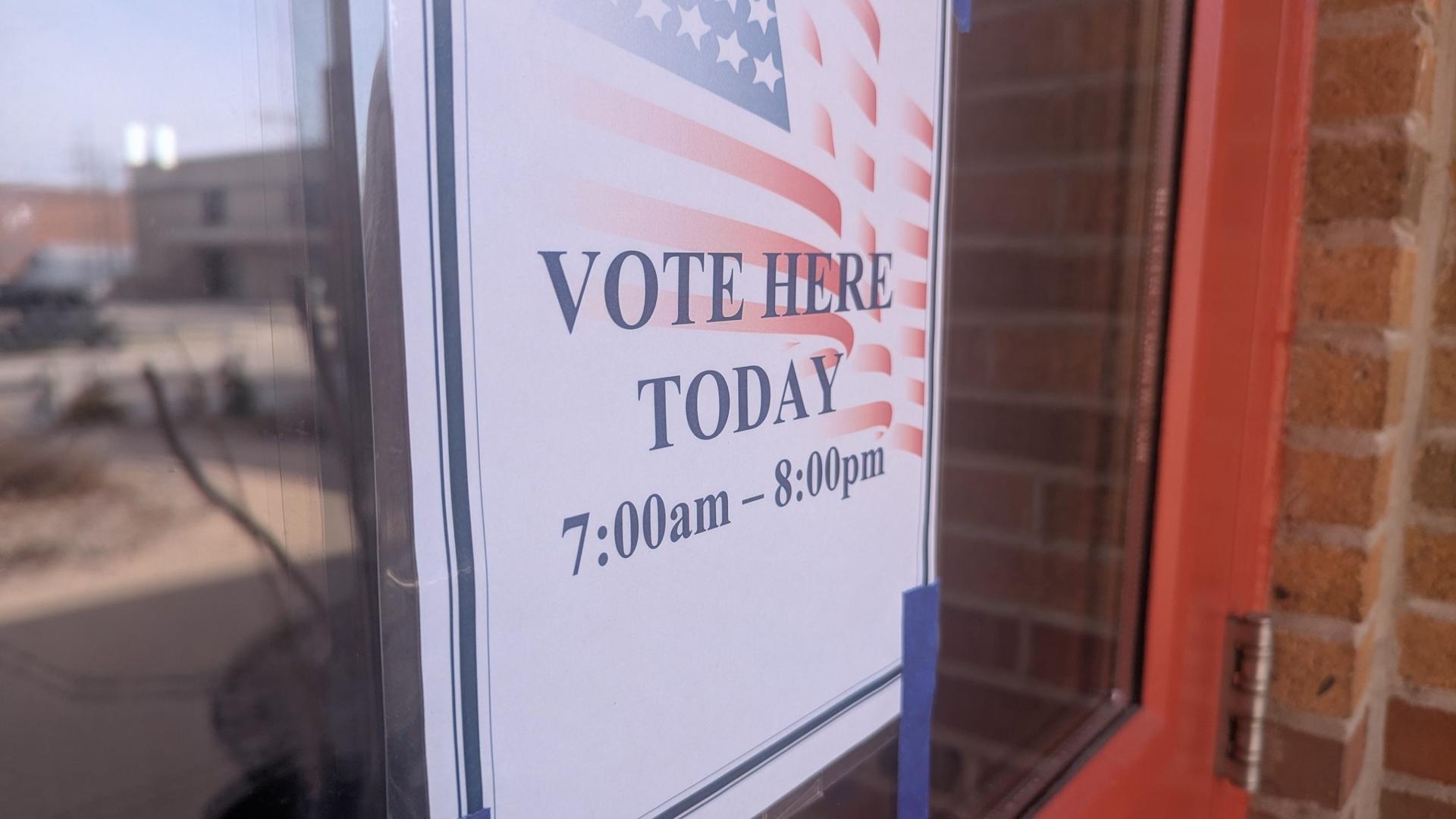
Source: Jimmie Kaska | Civic Media
Voters approve majority of school referendums in 2026 Spring Election
Nearly a quarter of school referendum questions statewide were decided by fewer than 90 votes, and roughly half had a yes/no split under 10%.

Apr 7, 2026, 9:11 PM CT


Share
MADISON, Wis. (WMDX) – Dozens of school districts saw ballot measures approved by voters during the 2026 Spring Election in Wisconsin.
According to unofficial results posted Tuesday night by county clerks across the state, 46 of 75 referendum questions passed, while 29 failed.
Margins for passing a referendum were tight, as 11 were approved by 83 or fewer votes. Four rural northern Wisconsin districts saw passage by under three dozen “yes” votes: Gilman (+30), Crandon (+19), Shell Lake (+2), and Butternut (+1).
On the flip side, four more districts saw their measures fail by fewer than two dozen votes: Twin Lakes #4 (-23), Montello (-23), Markesan (-19), and Lena (-17).
All told, 18 of the 75 referendum questions on ballots Tuesday were decided by fewer than 88 votes, or roughly a quarter. The gap between yes and no as a percentage of all votes was under 10% for roughly half of ballot measures, while only three questions saw a 70% or higher percentage of yes or no votes.
Debt referendums – capital projects involving facilities – passed 9 of 12 questions on ballots Tuesday. The projects ranged from a high school renovation project in rural Cornell, which overwhelmingly passed, in an effort to keep students in grades 9-12 enrolled in the district, to an approved $147 million project to update facilities all across the Howard-Suamico School District.
However, most of the questions asked on Tuesday were for operational referendums, with six districts seeking permanent increases to the tax levy (five of those passed, all in rural districts, with the lone failing vote happening in the relatively large Sauk Prairie School District) and the remaining 57 seeking non-recurring operational referendums.
Those would raise the levy limit for school districts temporarily to pay for staff and services to keep the district operating. 32 of these type of referendums passed in the Spring Election, with potentially big impacts for the districts that were able to pass operational ballot measures.
For Butternut, the district has attempted referendums the past two years, which both failed. The district hinted at major cuts to programming and a loss of student opportunities if the referendum failed again this year, and also posted that the school district could dissolve.
Shell Lake had been trying for years to pass a referendum after seeing losses in November 2024 and again in April 2025. While the district didn’t suggest dissolution of consolidation in referendum materials, posts by the district said that cuts to staff, classes and activities would be needed to balance the budget.
Lena, another rural northern Wisconsin district, said it would need to make significant cuts due to one of the state’s lowest school mill rates if its referendum failed. Unofficial election night returns showed that the district was 17 votes short of approval for a 5-year non-recurring operational referendum.
In eastern Wisconsin, Hustisford saw its fifth consecutive referendum fail, all coming since 2021. As a result, the district will now work towards dissolution. Interim Superintendent Todd Bugnacki thanked the school community for voting in a statement late Tuesday night.
“We thank all the supporters for the tremendous effort to educate our community on the facts and impact of the referendum,” Bugnacki said. “That passion and fortitude will forever be remembered by our parents, students and community members.”
The Hustisford School District, which was founded in 1850, now intends to dissolve by the start of the 2027-28 school year. Some of the options for next year will include seeking tuition agreements so students can still take all the classes they need while the district goes through dissolution.
“The referendum results have created a perilous situation for the future of our school district and the community,” Bugnacki said. “Work is urgently underway to ensure our students have access to high quality educational experience for the 2026-27 school year and beyond.”
Hustisford is not the only district facing potential dissolution with failed referendum votes Tuesday. Siren, another rural northern Wisconsin district, saw its operational referendum, essentially an extension of one it was already on, fail by 88 votes. District officials wrote in referendum materials that the next step if the referendum fails is to ask again in the fall, and that they wanted to avoid dissolution if possible.
Staying in northern Wisconsin, Winter School District saw its referendum fail by a large margin, with 60% no to 40% yes, and the district said in materials before the referendum that potential consolidation or eventual dissolution of the district would be on the table, and in the meantime, there would be a reduction in staff, classes, and activities.
Yet another rural northern Wisconsin district said that with a depleted fund balance and low mill rate, any more cuts to staff would lead to considering consolidation or dissolution. Gillett saw its operational referendum fail by the second-most lopsided margin in the state at 66% no to 34% yes.
Recent trends in how voters view school spending, rising property taxes, and political stances on public versus private school education are pushing down success rates of referendums in general and making the success or failure of each ballot measure subject to a handful of votes. Most districts also cited a lack of state funding for education, with the current formulas tied to enrollment, which is declining for the vast majority of districts.
Declining aid and rising costs in services and operations have left most districts – nearly two-thirds of the 421 districts in Wisconsin since 2023 – using referendums to help pay for staff, facilities, and other essential or legally-mandated services. Over 90% of districts in Wisconsin have had at least one referendum since the revenue limit system was put in place three decades ago.
Nearly every district included notes on advocating for change to the current school aid formula on their referendum websites. The current formula, which was de-coupled from inflation 15 years ago, has left public schools pacing well behind inflation for funding, prompting referendums at nearly every district in Wisconsin.
You can see election results from the 2025 Spring Election county-by-county on the Wisconsin Elections Commission website.
You can see a list of school referendums – and officially-reported totals – on the Wisconsin DPI website.
Finally, Civic Media has added up all the numbers from call sheets and summaries from election night returns from all 72 county clerk offices in Wisconsin on election night.
All results of school referendums will be canvassed by districts this month before they are considered official. Election night returns are unofficial.

Jimmie is Civic Media’s Sports Director who also works in digital content, sports, news, and talk programming. Email him at [email protected].
Want More Local News?

Civic Media
Civic Media Inc.
The Civic Media App
Put us in your pocket.