





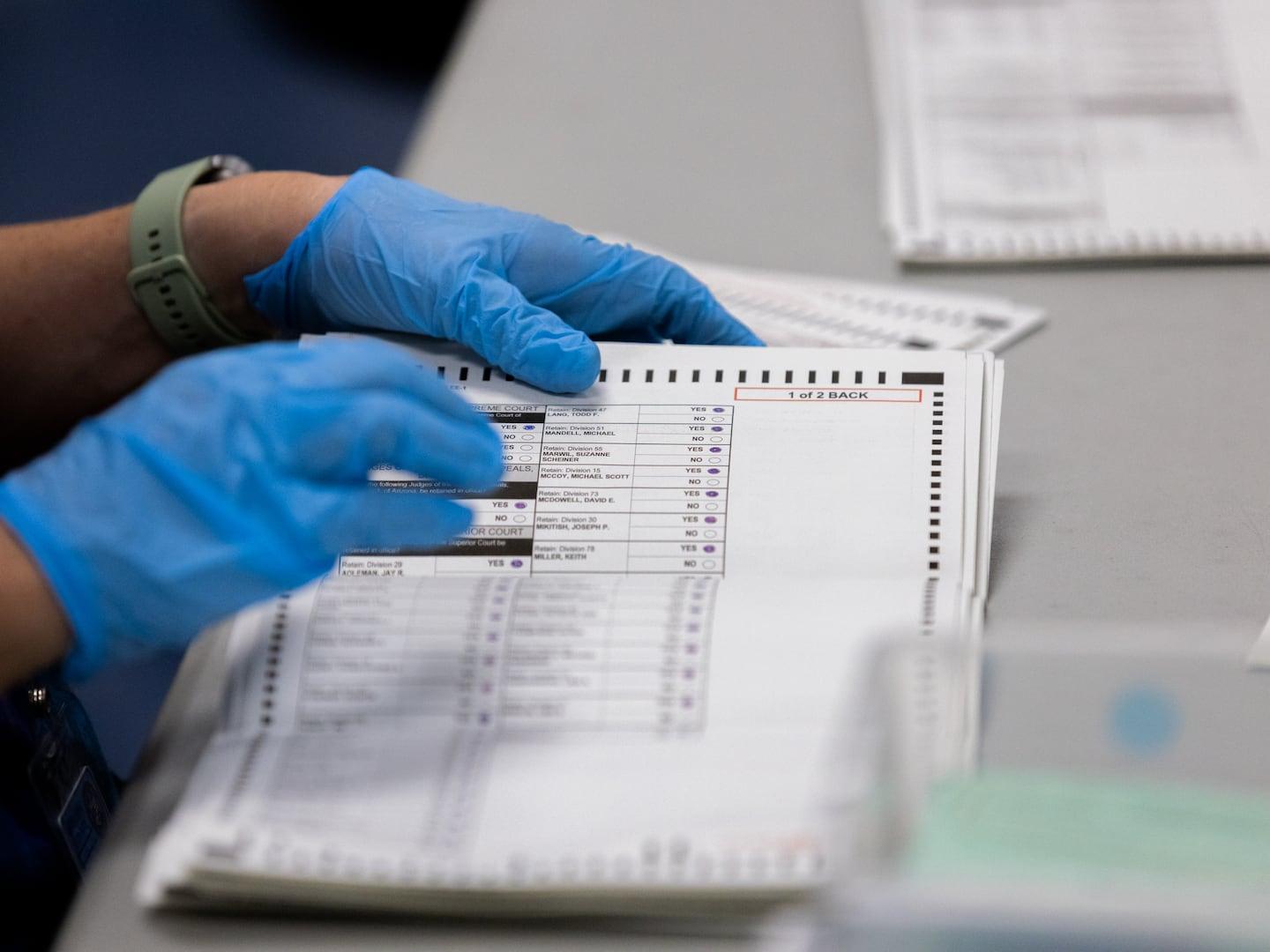


When the U.S. Supreme Court last week took up the question of late-arriving mail ballots, the discussion turned to something more basic: when a vote becomes final.
Justice Neil Gorsuch raised a hypothetical — whether a voter who has already mailed a ballot could change their mind and have a postal carrier cancel their delivery after learning new information about a candidate, even after Election Day.
For Mississippi, the plaintiff in the case before the court, the answer was clear. The state’s Solicitor General Scott G. Stewart told the court that’s not possible there. Once a ballot is cast, it stays cast.
The justices also spent significant time on the broader question of finality — whether voters ever get a second chance, or at least a way to undo a vote made too soon.
In most states, they don’t, especially after a ballot has been received by election officials and tabulated.
“I’ve never heard of a state allowing you to, after Election Day, go in and cancel your vote,” said John Lindback, a fellow at the Institute for Responsive Government and former executive director of the Electronic Registration Information Center, a multistate coalition dedicated to cleaning voter rolls. Lindback and other election officials filed an amicus brief in the U.S. Supreme Court case arguing against the federal government regulating mail ballot deadlines.
Lindback similarly said he’d never heard of voters recalling their ballots through the mail after Election Day.
In most states, Lindback said, a ballot is considered final once it’s cast, including by mail, though he said all states have laws outlining how to replace ballots.
The USPS allows for package recall, but election officials told Votebeat that it’s highly unlikely that canceling ballots happens in any large quantity, especially after Election Day. Outside of this process, voters in a handful of states can void and replace a ballot they’ve already returned by mail through a process often called ballot spoiling — but only under limited conditions and within narrow timeframes before Election Day.
In Wisconsin, for example, the legality of spoiling a returned ballot has gone back and forth in the courts. The issue gained prominence in 2022, after several Democratic U.S. Senate candidates — for whom voters had already cast ballots — dropped out of the primary. Ultimately, those ballots were counted as they were cast unless voters spoiled them within the set deadline, canceling their vote altogether or casting a new one.
Days before the primary election, the Wisconsin Elections Commission issued guidance outlining the process for ballot spoiling, which required voters to contact their clerk about it at least two days ahead of Election Day. Courts then banned the practice in early October 2022, after the primary election but after clerks started sending out ballots for the general.
Most recently, an appeals court in February rejected the case that challenged the practice on procedural grounds, meaning ballot spoiling is once again allowed. Even so, the state requires mail ballots to be received by 8 p.m. on Election Day to be counted, placing a firm cutoff well before the scenario raised at the Supreme Court.
Michigan law more clearly defines the limits. Voters who return an absentee ballot by mail can request to spoil their absentee ballots by the second Friday before the election. Ballots that have already been tabulated can’t be spoiled.
Minnesota sets an even earlier deadline: Voters can ask to cancel their returned ballot until the close of business 19 days before Election Day.
Together, these laws point in the same direction. While some states allow voters to void and replace a mailed ballot, they do so only within narrow, pre-election windows and before ballots are processed or counted. None allows a voter to retrieve or cancel a ballot after Election Day, once it has been accepted by election officials.
In general, every voter can get a new ballot if a dog eats their old one or if they accidentally throw their ballot away, said Tammy Patrick, chief programs officer of the National Association of Election Officials. But across the board, she added, nobody gets to vote more than once, and nobody votes after the polls close.
Alexander Shur is a reporter for Votebeat based in Wisconsin. Contact Alexander at [email protected].