





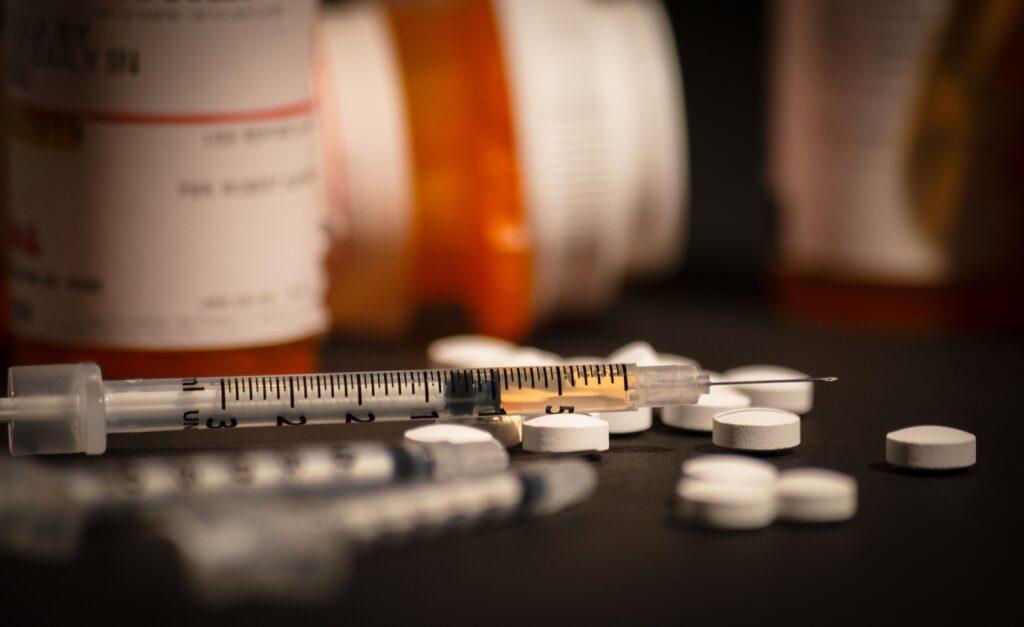


From 2021 to 2024, a new report reveals there was a dramatic increase in the number of incarcerated residents of Wisconsin’s jails and prisons accessing medications for opioid use disorder.

“Treatment Behind Bars: Medication for Opioid Use Disorder in Wisconsin’s Jails and Prisons” by the Wisconsin Policy Forum was released Wednesday at a press conference hosted by Vital Strategies Overdose Prevention Program, a global public health organization that has been working since 2018 to use “advanced evidence-based strategies on overdose prevention and to expand access to harm reduction and treatment, particularly for populations at highest risk,” said Giavana Margo, program manager.
The report notes that “medications for opioid use disorder are an important tool to help people manage symptoms of opioid withdrawal, as well as recover from symptoms of active opioid addiction. Research also shows that individuals who are newly released from prison are at elevated risk for overdose fatalities.”
The report said there are three factors that have “likely” resulted in the higher use of opioid use disorder medications in carceral settings:
- The high number of opioid deaths in the state that reached a peak in 2024
- The availability of opioid lawsuit settlement dollars from pharmaceutical companies to address treatment.
- Federal and professional agencies promoting the medications, and pressure from the U.S. Department of Justice to offer them to carceral residents under the Americans with Disabilities Act.
A fourth factor discussed during the press conference is the higher percentage of jail and prison facilities offering the medications, encouraging wider acceptability.
Jason Stein, president of the Wisconsin Policy Forum, said that even though the number of opioid deaths has dropped noticeably since 2024, the number of overdose deaths statewide is slightly higher than vehicle deaths, making overdoses a “significant public policy issue.”
He noted that of 71 jails in the state, 58 filled out a 42-question survey fully and seven answered partially, resulting in a 97% reporting rate for the jails, while the Department of Corrections (DOC) reported data via its central pharmacy that serves all the state prisons.
The primary two opioid use disorder medications used by facilities are methadone and buprenorphine.
“Both of those medications are associated with a decrease in overdose deaths as well as improvements in other important indicators such as recidivism,” he said.
The study also looked at the use of naltrexone, another medication that is not strictly for opioid use disorder, and it also looked at the prevalence of naloxone or Narcan, which is used to reverse opioid overdoses.
The report notes that only four residents in the DOC system took buprenorphine in 2021, but 148 were receiving it in 2024, and 44 took naltrexone in 2001 — a number that increased to 154 in 2024.
Stein said a 2021 Department of Health Services (DHS) report showed that only one-third of prisons offered any medication for opioid addiction, but by 2025 all 36 prisons were offering at least one medication.
Currently, Stein said, most Wisconsin jails — 53 of 65 that responded or 81.5% — offer one form of opioid medication. That is more than double the 25 jails, or 41%, that reported at least one medication in 2021.
“It’s more common for jails in the central and southeastern parts of our state to have multiple forms available,” he said of opioid medication. “In northern Wisconsin, it’s typically one form … such as buprenorphine.”
The report notes that offering the medications to those in jails and prisons results in a reduction of overdose deaths after release, as well as a decreased risk of death for any cause and a lower risk of reincarceration.
“We want to note that there is increased availability of these medications in both county jails and prisons around the state, making it available to thousands of individuals in 2024 at a substantial increase from 2021, but at the same time, there are some gaps, meaning access at the county level,” Stein said. “We had eight counties that stated they did not currently provide any access to these medications. We had five more counties that did not answer the survey. There are now 24 counties that provide some access to methadone, but that is still a minority, and we have a number of jails that, while they may provide continuation of existing prescriptions, they do not initiate individuals on those medications.”
He added, “We do see some opportunity … despite the challenges that may exist, to increase access; we do see some tools that local counties can turn to. One, there are more counties and private providers that are offering this service around the state, so there’s the potential for partnership, and then, as well, the availability of opioid settlement funds also makes the possibility of funding this service more practical in some cases for counties.”
Joanna Hernandez of Milwaukee shared her experience of struggling with addiction while incarcerated and the importance of continuing medication.
She recounted being arrested in 2013 in Walworth County while possessing a valid prescription for Suboxone (a medication to treat opioid addiction).
“The jail verified my prescription, but even after confirming it, they refused to give me my medication,” she said. “I was there for five days and went through very severe withdrawal. I was extremely sick and eventually segregated to a single cell. I remember guards telling me, ‘You know, this isn’t a hospital.’ As soon as I was able to post bail and get out, I used immediately. If I had been able to continue my prescription while incarcerated, I could have focused on healing and making sure my mental health medications were the right fit for me. Mental health plays a huge role in withdrawal.”
She added, “Experiences like mine show why access to medications for opiate use disorder is so important. Withdrawal in jail does not treat addiction. It actually increases the risk of relapse and overdose when people are released. Jails and correctional facilities need to treat opiate use disorder like the medical condition it is. Access to medications for opiate use disorder is about dignity, medical care and saving lives.”
Kenosha County Sheriff David Zoerner said an important part of his jail’s intake is an initial screening, so the residents get the resources they need and they also have those resources when they leave.
He noted it was a grant that provided the dollars to do the initial screening, and also stressed the limiting factor on how much his office can do is money, mostly from tax levies.
Zoerner said the most efficient way to offer methadone would be at the jail but he fears methadone could be “diverted nefariously,” so instead those who need it are driven daily to a facility, but that is also costly because it requires a deputy to transport the residents.
“My hope, based on what we’re doing right now with the early screens, is being able to work with the affected population while they’re in our custody, getting them peer support and some need therapy,” he said. “You understand that drug addiction, behavioral health issues, mental health, they all go hand in hand, so to facilitate that through and then with new legislation, hopefully we’re going to be able to get these folks prescriptions, a 30-day supply, before they leave.”
The new legislation Sheriff Zoerner referred to is AB 604, which passed the Legislature and is waiting for Gov. Tony Evers’ signature. It would allow the state to apply for Medicaid coverage for incarcerated people, including a 30-day supply of opioid medication prior to release.
At the press conference, Adriena Hust, state team leader of Vital Strategies, shared recommendations for expanding opioid use disorder medication access in Wisconsin jails and prisons.
“The first recommendation, incarceration is not treatment,” she said. “More should be done to avoid reincarceration. Most admissions to prison in Wisconsin are due to supervision and technical violations, rather than a new crime. While reforms are in progress, Vital Strategies recommends that Wisconsin continue to minimize revocation and eliminate incarceration sanctions for drug use while on supervision, considering reoccurring drug use is a common part of substance use treatment. Although today’s study did not deal with the issue of revocations, we know they are costly, and the savings to minimize them can go toward medication and staffing.”
Another recommendation is to make methadone and buprenorphine standard treatments for opioid use disorder.
And she said counseling should be optional and not a condition to receive medication because it is the medication that saves lives.
“As mentioned, people are at extreme risk of dying by overdose in the first few weeks after leaving carceral settings,” she said. “It is important that re-entry planning focus on seamless continuation of medication in the community, which greatly reduces this mortality risk.”
And she noted that those incarcerated who have a right to medication under the Americans with Disabilities Act should have “recourse against violations without fear of retaliation,” in demanding medication. Lastly, she said, the state and counties should prioritize opioid settlement dollars for “opioid use disorders in jails and prisons.”