




Source: Lisa M. Hale/Civic Media
Haitian community celebrates Independence Day on January 1st
Immigrants in the Fox Valley foster community and connection by gathering over food

Jan 1, 2026, 10:50 AM CT


Share
Listen:
APPLETON, WI—(WISS)— Many Wisconsinites spent New Year’s Day watching football or nursing hangovers following New Year’s Eve celebrations. But a group of Haitian immigrants in the Fox Valley came together to celebrate Haitian Independence Day.
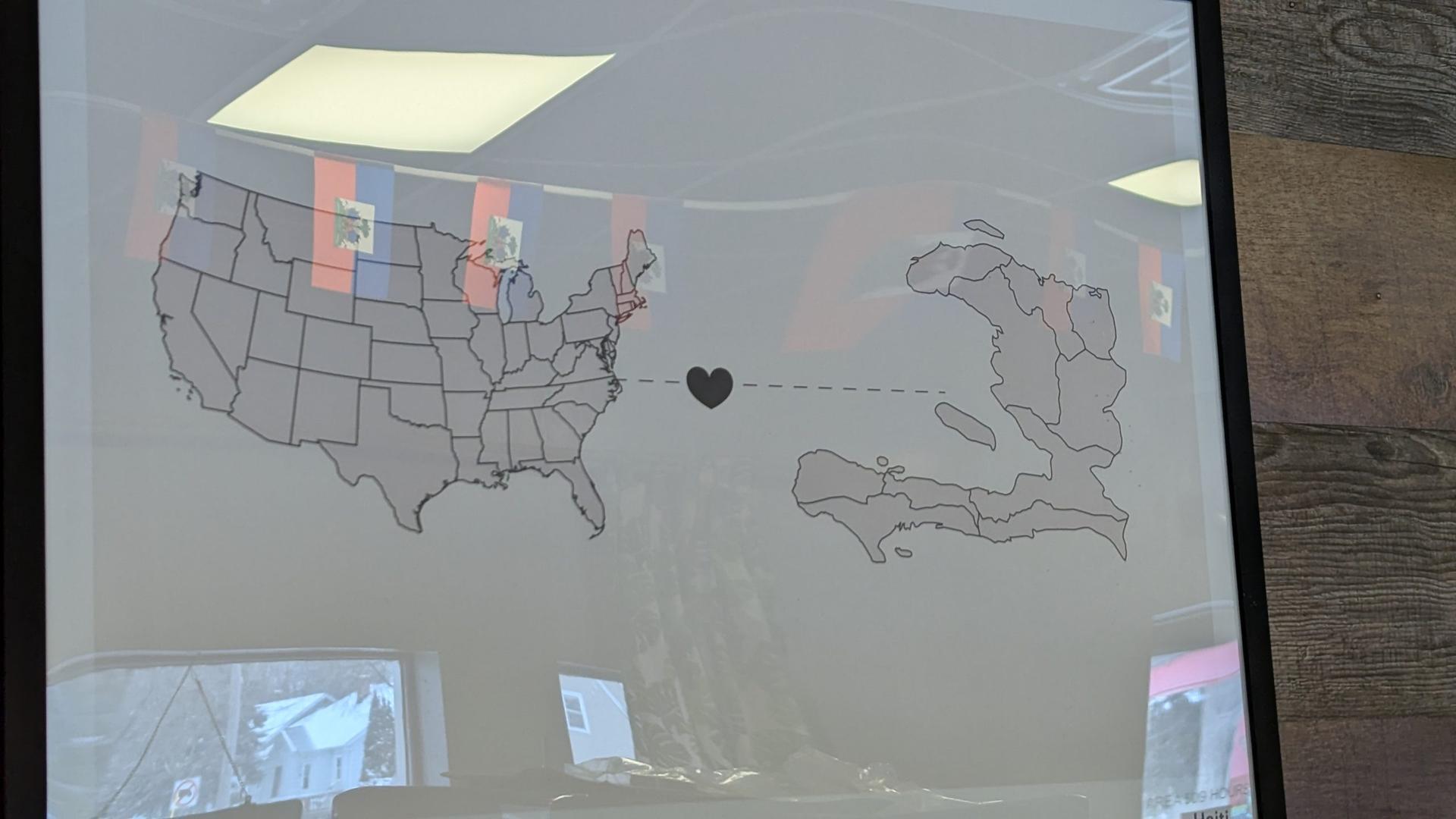
Haiti, a country sharing the island of Hispaniola with the Dominican Republic to the East, declared its independence from French rule on January 1, 1804. Following the only successful slave revolt in history, the declaration also created the world’s first black republic.
Members of the Haitian immigrant community gathered at Area509, a Haitian restaurant in Appleton, to celebrate the event and find connection.
Reggie Desamour, owner of Area509 and a Haitian immigrant himself, said the need to hold on to the food, the observances, and the culture of his country of birth is essential.
“ Everything that we bring here, it’s come from home. It’s come from the heart, come from the mother. And that’s the motherland,” Desamour said. “Every skill that we have today, we learn that from Haiti, from my mother. And it’s important to carry that heritage around to show it to the community.”
Even more important than maintaining the culture of home, Desamour said that in a time of increasing negativity toward the immigrant community, they need a sense of connection and belonging.
“ Even though we have all the negativity like happening right now, we feel really good to receive all the support like we have receiving today from the community,” Desamour said.
Hennesey Honcho is a Haitian immigrant living in the Fox Valley. He came to the USA as a child, settling in Florida. Honcho moved to Wisconsin seven years ago. He said events like this help him know he’s not alone.
“ It gives me my sense of culture because coming from Florida, there are more Haitians there than coming up here. I’m like, I ain’t know no Haitians out here. So when I met him (Desamour) and I seen he’s still keeping the food, the tradition, and all that!”

In addition to his usual offerings of jerk chicken and oxtail, Desamour had a set menu for the Haitian Independence Day celebration that he called “The Neighborhood Plate.” It included poul fri (Haitian fried chicken), rice and beans, fried plantains, pikliz (spicy coleslaw), and Soup Joumou.
“I love it so much, especially that he got the Soup Joumou, which is big for Haitians!” said Honcho. “It’s basically our meal that we ate during the revolution, as we got free from slavery and all that. So it’s very much something that’s every person that’s naturally born Haitian. This is what we grew up eating.”
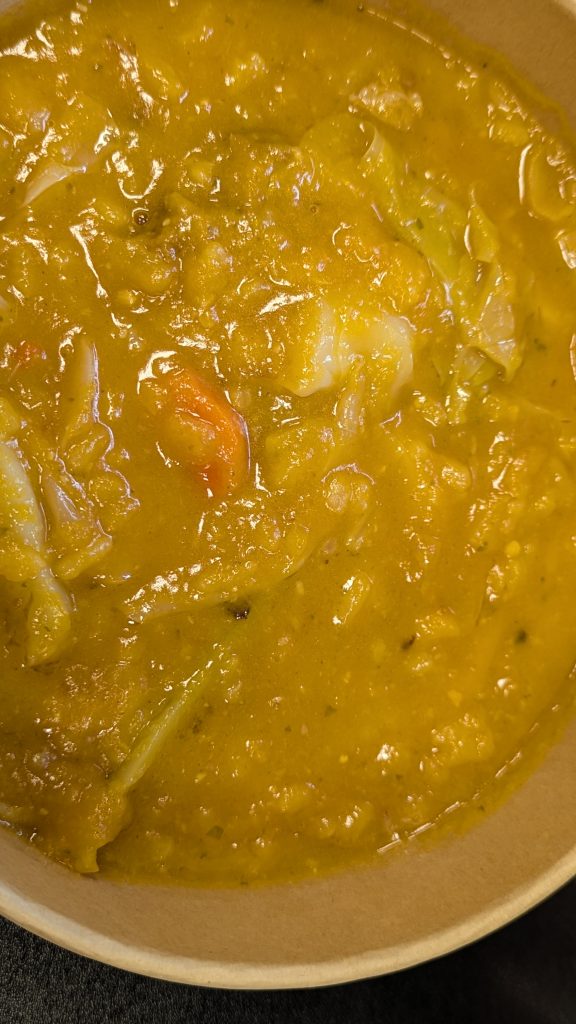
Soup Joumou, made from squash, beef, vegetables, and spices, is served in Haitian households on Independence Day. Known as the “forbidden soup” during the French Colonial rule of Haiti, the dish has become a symbol of equality and freedom. When enslaved under the French, the people of Haiti were forced to make and serve the soup to their masters, but were not allowed to eat it themselves. Once independent, the Haitian people embraced the soup, giving it new meanings of defiance and liberation.
Desamour explained that “The Neighborhood Plate” demonstrates the tradition in Haiti that on Independence Day, everyone has a plate at the table and everyone is welcome.
“It’s kinda like a reconciliation day today,” Desamour said. “So I’m hoping like what we do today, people use that as well as a reconciliation toward immigrants, toward people with color, toward people Hispanic, and everybody like L-G-B-T-Q and everybody. See, everybody is equal because at the end of the day, we’re all God’s child. And if we are God’s child, why do we have hate in our heart?”

Lisa Hale is Northeast Wisconsin Bureau Chief and the voice of newscasts on WISS. Email her at [email protected].
Want More Local News?

Civic Media
Civic Media Inc.
The Civic Media App
Put us in your pocket.